No hot water? Here’s what to do right now.
If you smell gas, leave first and call from outside. Otherwise, no hot water is a job for today, not an emergency.
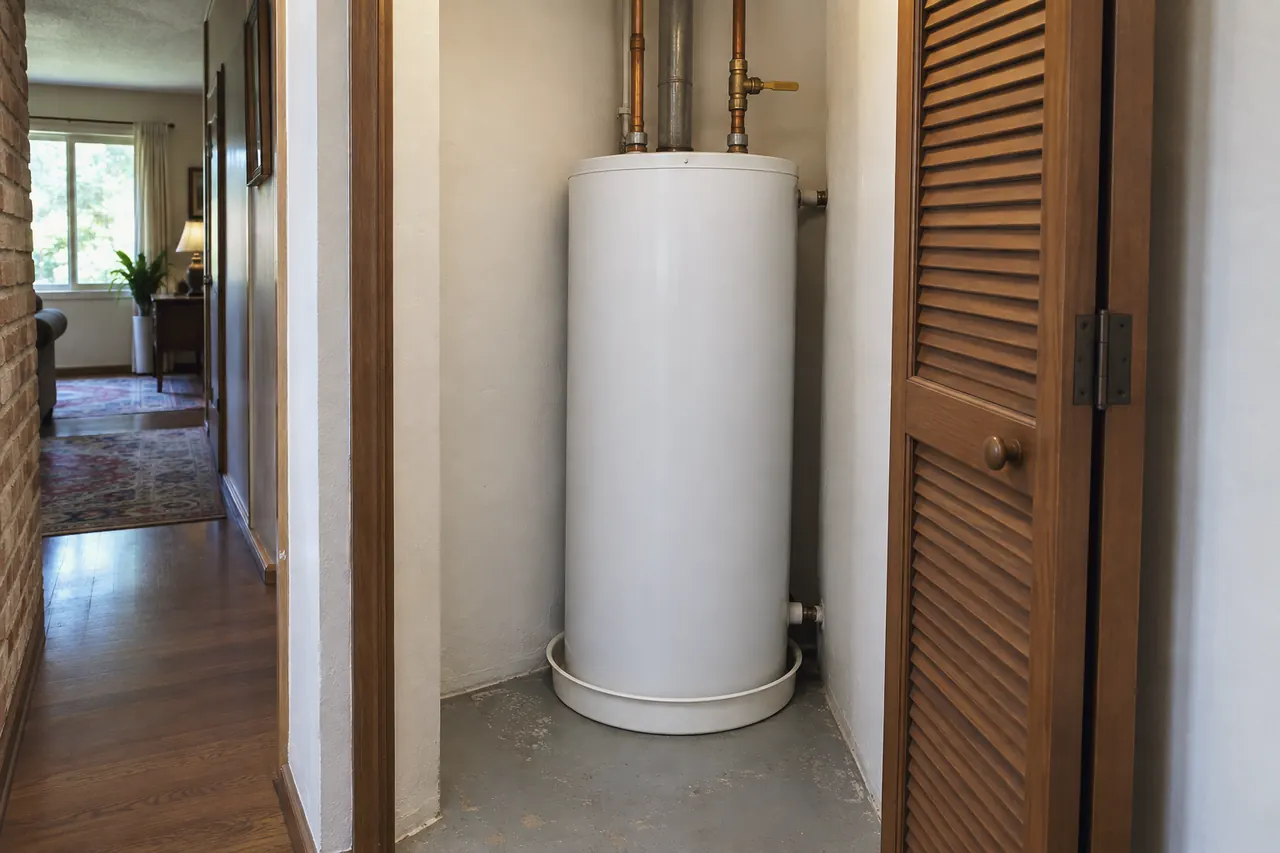
First, this.
Smell gas? Leave, then call
If you smell gas (rotten eggs), leave immediately on foot. Do not use switches, phones, or anything that could spark. From a safe distance call 911 and your gas utility.
SourceElectric? Breaker off first
For an electric water heater, turn off power at the circuit breaker before touching wiring or panels.
SourceFlooded heater? Don’t light it
If a gas water heater has been underwater, do not try to operate it. Contact the gas utility or a qualified service professional for a safety inspection.
SourceLeave the gas to a professional
If the gas was turned off, do not turn it back on yourself; only a qualified professional should restore it.
Source
Usually a job for today.
- Call now(911 and the gas utility): any gas smell. CenterPoint says to treat every gas smell as an emergency.
- Call nowCarbon monoxide alarm sounding or CO symptoms, or a tank leaking water toward electrical connections.
- TodayNo hot water, a tank leaking at the base, or a relief valve that keeps discharging.
- Can waitIf your water heater is more than 10 years old, start shopping for a replacement now.
Before you call.
Safety first
- CPSC urges setting water heaters to 120 degrees F to prevent scalds; even at 120 degrees, a five-minute exposure could cause third-degree burns. Source
- Keep gasoline and other flammable liquids away from a gas water heater. Their vapors can reach the burner or pilot light and ignite in a flashback fire. Source
- Install a hardwired carbon monoxide alarm with battery backup near a fuel-fired water heater. Source
- The temperature and pressure relief (TPR) valve is a safety device that releases hot water or steam when pressure or temperature builds up too high; test it yearly per the manufacturer. Source
What to tell the plumber
- Gas or electric, and tank or tankless.
- Brand, capacity (gallons), and age from the label on the unit; a photo of the label helps.
- Where it is installed (garage, attic, closet, utility room).
- The symptom: no hot water, not enough hot water, leaking (where), dripping relief valve, pilot will not stay lit, odd noises.
- Whether you have shut off the power or gas and the cold-water supply.
What it costs
Your plumber quotes before starting; we don’t publish plumbers’ prices. City fees we can source: Longview residential building permit - mechanical, electrical, plumbing, gas, irrigation: $80.
Calling us is free. The plumber pays us a referral fee.
Worth knowing
14 on our list do water heaters.
Of the 26, by their Google profiles. Sam checks who takes it when you call.
We don’t do the work. Reviews are for each plumber, from Google.